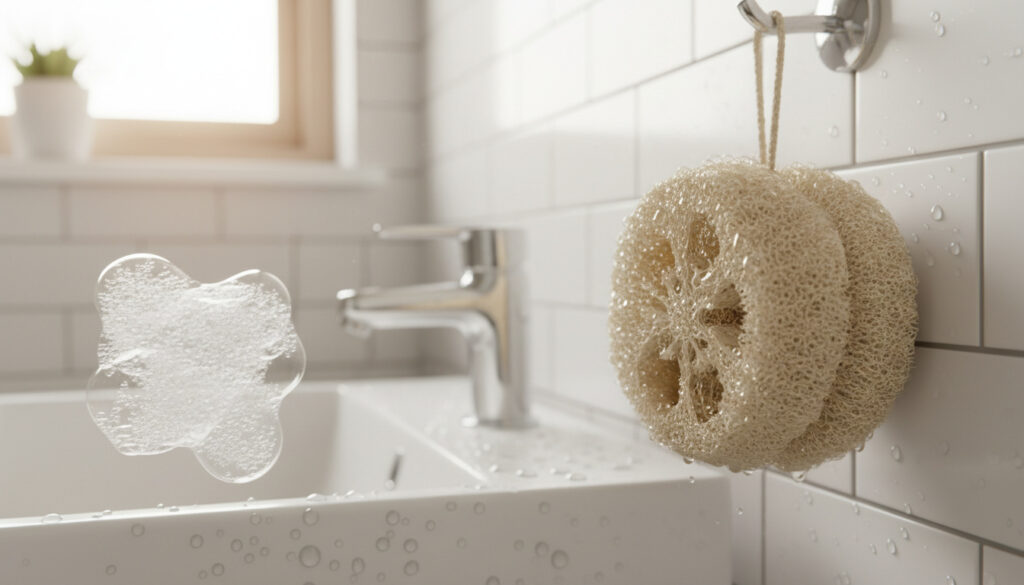
How to Clean a Loofah – Expert Guide to Safe Bath Hygiene
Natural loofahs provide gentle exfoliation, yet their fibrous structure traps dead skin, soap residue, and moisture—creating ideal conditions for bacterial growth. Without regular maintenance, these seemingly innocent bath tools can harbor staphylococcus and E. coli, potentially compromising skin health.
Proper cleaning protocols transform loofahs from bacterial breeding grounds into safe skincare implements. Medical experts emphasize that routine sanitization, combined with thorough drying, significantly reduces microbial contamination while extending the sponge’s functional lifespan.
Understanding the distinction between daily maintenance and weekly deep cleaning proves essential for effective hygiene. Natural plant-based loofahs require different care than synthetic alternatives, and certain cleaning methods prove more effective than others for eliminating persistent bacteria.
How Do You Clean a Loofah? Step-by-Step Methods
Effective loofah maintenance requires both immediate after-care and periodic deep sanitization. While daily rinsing removes surface debris, weekly disinfection addresses the microscopic organisms that thrive within the sponge’s porous network.
Weekly Deep Cleaning
Perform thorough disinfection once weekly using vinegar, bleach, boiling water, or heat methods to eliminate bacterial colonization.
Proper Drying Protocol
Hang loofahs in cool, dry, well-ventilated areas outside the bathroom to prevent moisture retention that fuels bacterial growth.
Timely Replacement
Discard natural loofahs every three to four weeks, or sooner if you observe slime, mold, or musty odors.
Daily Rinse Routine
Rinse thoroughly under warm running water after each use, shaking out excess water and wringing with a dry towel.
Key insights from dermatological research reveal critical hygiene factors:
- Loofahs trap skin cells and soap residue, creating breeding grounds for staphylococcus and E. coli when moisture persists
- White vinegar solutions effectively kill bacteria without harsh chemical residues
- Diluted bleach reduces contamination but requires thorough rinsing to prevent skin irritation
- Heat methods including boiling water and microwave irradiation kill pathogens within minutes
- Natural loofahs typically last three to four weeks with proper maintenance
- Silicone alternatives resist bacterial colonization without requiring frequent deep cleaning
- Visible contamination signs include slime, mold, and persistent musty odors
| Specification | Details |
|---|---|
| Weekly Deep Cleaning | Required once per week |
| Replacement Interval | Every 3-4 weeks for natural loofahs |
| Primary Bacteria Risks | Staphylococcus and E. coli |
| Vinegar Solution Ratio | 1 part vinegar to 2 parts water (or equal parts hot water) |
| Bleach Concentration | 10% bleach-water solution |
| Boiling Duration | 2-3 minutes |
| Microwave Time | 30 seconds on high (loofah must be fully wet) |
| Dishwasher Option | Safe for sanitizing cycle |
| Daily Drying Time | Complete drying between uses essential |
| Usage Frequency Limit | No more than twice weekly recommended |
Natural Disinfection with Vinegar
White vinegar offers an effective, eco-friendly sanitization option. Mix one part white vinegar with two parts water, then soak the loofah for five to ten minutes. For heavily soiled sponges, use equal parts vinegar and hot water, extending the soak to fifteen or twenty minutes. Zero Waste Store guidelines confirm this method naturally eliminates bacteria without introducing synthetic chemicals.
Bleach Solutions for Deep Cleaning
For persistent contamination concerns, prepare a diluted 10% bleach-water solution. Soak or dip the loofah for five minutes, then rinse thoroughly with cool water. Healthline research indicates this approach reduces bacterial loads, though some experts debate its impact on natural fiber longevity.
Boiling Water Method
Submerging loofahs in boiling water for two to three minutes kills bacteria effectively. This heat treatment requires no chemical additives, making it ideal for those sensitive to cleaning agents. Remove the sponge carefully and allow complete drying before storage.
Microwave Sanitization
Dampen the loofah completely—ensuring saturation prevents fire hazards—then microwave on high for thirty seconds. Textile care specialists recommend this rapid technique for plant-based sponges, though it suits natural fibers better than synthetic alternatives.
How Often Should You Clean a Loofah?
Maintenance frequency determines whether your loofah remains a hygiene tool or becomes a health hazard. Medical guidelines recommend weekly disinfection alongside daily rinsing, while limiting actual use to no more than twice weekly to prevent skin irritation.
Daily Rinse Protocols
Immediate post-use care prevents bacterial establishment. Rinse thoroughly under warm running water to dislodge soap, dead skin, and debris. Shake out excess moisture, then wring the sponge with a dry towel. Most importantly, hang the loofah to air dry in a cool, dry, well-ventilated area outside the bathroom—avoiding damp shower corners where humidity concentrates.
Loofahs used on sensitive areas like the face, genitals, or perineum can spread E. coli and other pathogens. Medical professionals recommend avoiding these areas entirely and pausing use for several days after shaving to prevent infection through microscopic nicks.
Recognizing Replacement Timeframes
Even with diligent cleaning, natural loofahs accumulate bacteria over time. Replace plant-based sponges every three to four weeks, or immediately upon noticing slime, mold, musty odors, or visible discoloration. Cleveland Clinic research confirms these indicators signal advanced bacterial colonization that cleaning cannot reverse.
Drying location significantly impacts bacterial growth. Sponges left in humid bathrooms retain moisture, while those hung near windows or on racks in dry areas shed water quickly, reducing microbial multiplication.
Individuals with compromised skin barriers, recent shaving irritation, or dermatological conditions face higher infection risks from contaminated loofahs. Adjust usage frequency and replacement schedules accordingly.
Can You Put a Loofah in the Washing Machine?
Despite common assumptions, research has not established washing machine protocols as effective for loofah sanitization. Mechanical agitation may damage the fibrous structure without adequately penetrating deep pores where bacteria reside. However, Cleveland Clinic specifically identifies dishwashers as viable sanitizing alternatives for both natural and synthetic bath sponges.
Dishwasher Sanitization
Running loofahs through a standard dishwasher cycle effectively kills bacteria using high-temperature water and steam. This method suits those seeking hands-free disinfection without chemical soaking. Ensure the sponge sits securely in the rack to prevent damage to dishwasher components.
Silicone Loofah Maintenance
Silver or zinc-infused silicone alternatives present distinct advantages over plant-based options. These materials resist odor-causing bacteria, mold, and mildew without requiring weekly deep cleaning—simple rinsing and drying suffices. Product demonstrations indicate silicone maintains hygienic properties significantly longer than natural fibers.
For those harvesting homegrown luffa sponges, initial preparation requires soaking dried exoskeletons to ease skin removal and seed extraction, though this applies specifically to freshly harvested rather than commercially purchased loofahs.
When Should You Replace Your Loofah?
Understanding the complete lifecycle of bath sponges ensures consistent hygiene. The following timeline identifies critical maintenance milestones:
- Daily: Rinse thoroughly under warm water, shake out excess moisture, wring with a dry towel, and hang in a cool, dry, ventilated area outside the bathroom
- Weekly: Deep clean using vinegar soak, bleach solution, boiling water, microwave treatment, or dishwasher cycle to eliminate bacterial buildup
- Every 3-4 weeks: Replace natural loofahs entirely, regardless of visible condition, as bacterial accumulation reaches critical thresholds
- Immediate action: Discard upon detecting slime formation, mold growth, persistent musty odor, or visible funk—composting natural options where facilities exist
What Safety Certainties Exist Regarding Loofah Use?
Established Facts
- Weekly cleaning protocols reduce bacterial contamination by significant margins
- Natural loofahs maintain structural integrity for three to four weeks with proper care
- Staphylococcus and E. coli demonstrably thrive in moist, uncleaned loofah environments
- Silicone alternatives resist bacterial colonization without intensive maintenance
Remaining Questions
- Exact bacterial load quantities vary substantially based on local water quality and individual skin biomes
- Long-term effects of bleach exposure on natural fiber degradation remain subject to debate among textile specialists
- Individual susceptibility to infection varies widely based on skin barrier integrity
What Happens If You Don’t Clean Your Loofah?
Neglected loofahs transform into porous petri dishes. The combination of retained moisture, trapped skin cells, and residual soap creates anaerobic environments where staphylococcus and E. coli multiply exponentially. Centers for Disease Control guidelines on bathing hygiene emphasize that contaminated skin care tools can cause infections when introduced through microscopic abrasions.
Beyond bacterial concerns, fungal organisms colonize chronically damp sponges, producing visible mold and musty odors. These contaminants transfer to skin during subsequent use, potentially causing allergic reactions, contact dermatitis, or exacerbating existing conditions like eczema. Globe and Mail Sudoku – Daily Puzzles Access and Features enthusiasts might compare this persistence to the recurring challenges of maintaining daily routines—both require consistent attention to prevent unwanted complications.
What Do Medical Experts Recommend for Loofah Hygiene?
“Loofahs can double as bacterial breeding grounds, harboring organisms that may cause infection if introduced through small skin breaks.”
— Cleveland Clinic Department of Dermatology
“Proper hygiene maintenance requires understanding that exfoliation tools require the same sanitation attention as other personal care items.”
“Consumer testing reveals significant bacterial accumulation in moist bathroom environments, necessitating regular replacement schedules.”
How Can You Maintain Optimal Loofah Hygiene Long-Term?
Sustainable loofah maintenance requires consistent adherence to daily rinsing, weekly disinfection, and monthly replacement schedules. Consider transitioning to silicone alternatives for reduced maintenance, or implement subscription services ensuring regular natural sponge replacement. Those interested in sustainable home care might also explore Recette Filet de Porc Asiatique – Easy 30-Minute Wok Recipe for complementary wellness practices.
Frequently Asked Questions
Does microwaving clean a loofah?
Yes, microwaving effectively sanitizes natural loofahs. Dampen the sponge completely to prevent fire hazards, then microwave on high for thirty seconds. This heat treatment kills bacteria and pathogens residing within the fibrous network.
Should you soak a loofah in bleach?
Bleach solutions effectively reduce bacterial contamination. Use a diluted 10% bleach-water mix, soaking the loofah for five minutes before rinsing thoroughly with cool water. While effective, some experts debate whether frequent bleach exposure degrades natural fibers over time.
Can you boil a loofah to clean it?
Boiling provides effective chemical-free disinfection. Submerge the loofah in boiling water for two to three minutes to eliminate bacteria, then rinse and dry completely before storage.
How do you know when to replace a loofah?
Replace natural loofahs every three to four weeks, or immediately upon noticing slime, mold, musty odors, or visible funk. These indicators signal bacterial overload that cleaning cannot remediate.
What happens if you don’t clean your loofah?
Uncleaned loofahs harbor staphylococcus and E. coli, causing skin infections, folliculitis, and potential systemic illness when bacteria enter through microscopic skin breaks.
Is it safe to use a loofah every day?
Medical recommendations suggest limiting loofah use to no more than twice weekly. Daily exfoliation strips protective skin barriers, while daily use accelerates bacterial accumulation between weekly cleanings.
How to clean a silicone loofah?
Silicone loofahs require minimal maintenance. Simply rinse thoroughly after use and hang to dry. Unlike natural fibers, silicone resists bacterial colonization without weekly deep cleaning or frequent replacement.
More related posts
 Is Creatine Bad for You – Evidence-Based Safety Review
 French to English Translate – Best Tools Compared 2025
 What Is the Mediterranean Diet – Food List, Meal Plans & Recipes
 Steve Will Do It – Age Height Net Worth Family Facts
 Assistant to the Villain – Definition, Examples, Tropes
 New Blood Pressure Guidelines – 2025 Key Changes
 What Causes Canker Sores? Triggers, Treatments & Myths
 Springsteen Deliver Me From Nowhere – Film Facts Release Cast